
written by Allison Jarrell, MMM Founder and CEO
My nerves have come out in so many different ways over the years. When I was in high school, I competed in quite a few classical piano competitions, and I was nervous every single time. Was this a form of self-torture? Maybe. Why would I willingly put myself through this over and over again?
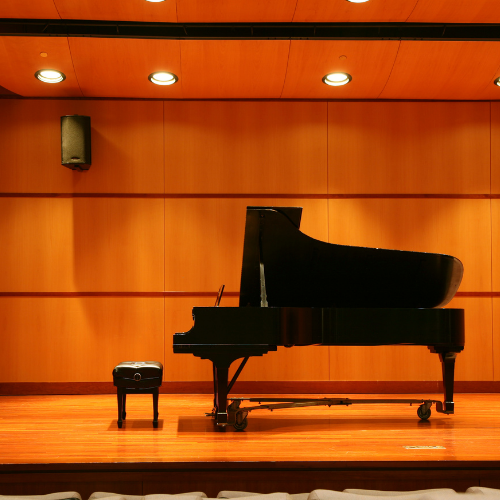
I remember sitting at a concert grand Steinway in Furman University’s recital hall and suddenly feeling as though I were shrinking behind the piano while the keys grew bigger in front of me. It was as if I had never sat down at a piano before.
During one performance, my leg started shaking uncontrollably. It was like every bit of nervous energy in my body had concentrated in that one leg. To make matters worse, it was the leg connected to the foot on the sustain pedal. I couldn’t focus on the piece because I was too busy trying to calm my leg, and I’m not even sure how the rest of the performance went.
Another time, I was playing Rachmaninoff in a private audition for a Russian Composer Competition. I became so flushed and hot that I rushed through the piece and fled the audition room looking for fresh air. Miraculously, I made it to the finals.
So why did I keep doing this to myself? Because performing matters.
Preparing for a performance asks something different of us than practicing alone. It gives students a goal to work toward and often inspires a different level of focus. A section they might otherwise let slide suddenly becomes more important when they know they will be sharing it with an audience.
Performing also teaches students how to keep going when something doesn’t happen exactly as planned. Maybe they miss a note, forget what comes next, or play a section differently than they practiced it. Learning to recover and continue is an important musical skill, but it’s also something they can carry into other areas of their lives.
There is a different kind of listening that happens during a performance, too. Students become more aware of the music, the space around them, and the people who are listening. They learn how to communicate through music rather than simply playing the correct notes.
Performance isn’t about getting everything right. It’s about having the courage to share something you’ve worked on with other people. Each time students do that, they gain more confidence performing in front of an audience.
That confidence usually doesn’t appear before the first performance. It develops through experience. School and community performances, studio recitals, showcases, and auditions all give students different ways to practice being in front of an audience. Each environment teaches them something new.
I certainly never reached a point where I felt completely free of nerves. But every competition, audition, recital, and performance taught me that being nervous didn’t mean I couldn’t do it. The goal wasn’t to eliminate the nerves. It was to learn that I could feel them and still sit down at the piano and play.
Whether you’re preparing for your first performance or looking for new ways to grow as a musician, the right teacher can help you build your skills and confidence one step at a time. Metro Music Makers offers personalized in-home and online music lessons for kids, teens, and adults throughout the Atlanta and Charlotte areas.