
written by Allison Jarrell, MMM Founder & CEO
Over the years, I’ve spent a lot of time thinking about what I hope my students carry with them long after their lessons are over. Of course, I want them to learn songs, develop strong technique, and grow as musicians. But after more than three decades of teaching, I’ve realized some of the most meaningful lessons have very little to do with music itself.
I’ve been teaching since 1992. During that time, I’ve had the privilege of working with students of every age—from preschoolers experiencing music for the very first time to adults returning to an instrument after decades away. I’ve also had the opportunity to work with individuals through music therapy, where I’ve seen how music can connect us, comfort us, and help us express things that words sometimes can’t.
No two students have ever been exactly alike, and that’s one of the things I love most about teaching. Every student brings a different personality, different goals, different strengths, and different challenges. Over the years, a few lessons have remained true no matter who is sitting at the piano bench or walking through the lesson room door.
Enjoy the Process
I hope every student enjoys making music.
That doesn’t mean every lesson is easy or every practice session is exciting. There will be days when a new rhythm feels impossible, your fingers don’t seem to cooperate, or you wonder if you’ll ever master that one tricky section. Those moments are part of learning.
But somewhere along the way, I hope you find joy in the process. Joy in finally playing a favorite song. Joy in realizing that something which felt impossible a few weeks ago suddenly feels natural. Joy in creating something that didn’t exist before you sat down at your instrument.
Music is a lifelong journey. There will always be another piece to learn, another challenge waiting for us, and another opportunity to grow. Don’t get so focused on the destination that you forget to enjoy getting there.
Everyone Learns at Their Own Pace
This summer I started taking jazz piano lessons, and let me tell you… it’s been humbling.
After a lifetime of classical training, I’m learning to think about music in an entirely different way. More than once, I’ve had to remind myself of the very same thing I tell my students: everyone learns differently.
It’s easy to compare ourselves to someone performing on social media, in a band, or at a recital. But those moments are only snapshots. We don’t see the hours, months, or years of learning that came before them.
Some students move quickly through new concepts. Others need more time for things to click. Neither path is better than the other.
Be patient with yourself when something takes time. At the same time, don’t be afraid to challenge yourself. Real growth happens when we’re willing to keep going, even when progress feels slow.
Everything Relates to Everything
One of my music therapy professors at Florida State had a saying I’ll never forget:
“Everything relates to everything.”
He wasn’t talking about music. He was encouraging us to pay attention—to recognize that everything we do, everything we say, and every experience we have influences something else.
I didn’t realize it then, but music had already been teaching me that lesson.
When I was growing up, my parents could often tell what kind of day I’d had simply by listening to me play the piano. I didn’t always realize it at the time, but I was processing my thoughts and emotions through music. Looking back, what an incredible outlet that was—and still is.
That same idea shows up every day in music lessons. People sometimes ask why we spend time on scales, theory, ear training, sight reading, or technique when all they really want to do is play their favorite songs. The answer is simple: everything connects.
Scales build technique. Technique gives us more freedom at the instrument. Theory helps us understand how music works. Ear training helps us recognize patterns. Sight reading builds confidence. Every skill supports another, and together they allow us to make the music we love.
That’s one of the reasons I believe music is about so much more than learning to play an instrument. It teaches patience, perseverance, creativity, self-expression, and resilience. The confidence we gain from overcoming a difficult passage often carries into other parts of our lives.
Everything really does relate to everything.
Learn to Think Like a Musician
One of the phrases my students hear me say over and over again is, “That’s okay. Let’s look at it together.”
I don’t immediately point to the correct note or tell them exactly what to fix. Instead, I start asking questions. What do you notice here? Does that rhythm match what’s written? Is there another fingering that might work better? What do you think is causing the problem?
My goal isn’t simply to help students play the right notes. I want them to become problem solvers.
One of the biggest misconceptions about practicing is that if you simply play through a difficult passage enough times, the mistake will eventually disappear. Sometimes it does, but more often we’re just reinforcing the mistake.
Real progress usually comes when we slow down enough to understand what’s happening. We isolate one measure. We look at the rhythm, the fingering, the technique, or the notes themselves. Every missed note tells us how to tweak our practice.
Some concepts click in a single lesson. Others take weeks, months, or even years before everything suddenly makes sense. I’ve watched it happen enough times to know that learning isn’t always immediate, and that’s perfectly okay.
To me, becoming a musician isn’t about avoiding mistakes. It’s about learning how to work through them.
Music Is More Than the Notes
There comes a point in almost every student’s musical journey when something begins to change.
At first, most students are focused on playing the right notes at the right time. They’re thinking about finger numbers, rhythms, and remembering what comes next. That’s exactly where they should be.
Then, almost without realizing it, something else starts to happen.
Instead of simply playing the notes, they begin making music.
One of my favorite moments as a teacher is when a student begins thinking beyond the notes on the page. They shape a phrase without being reminded. They naturally change the dynamics because they hear something beautiful. Their own personality begins to shine through in their playing.
Those moments are exciting because I know the student is beginning to hear music differently.
Yes, learning the notes matters. Technique matters. Rhythm matters. Those things give us the tools we need to express ourselves. But the goal has never been to play every note perfectly.
The goal is to communicate something through your music.
Music Doesn’t Have to Become Your Career
One of the greatest privileges of teaching for more than three decades is seeing the lasting impact music can have on a student’s life.
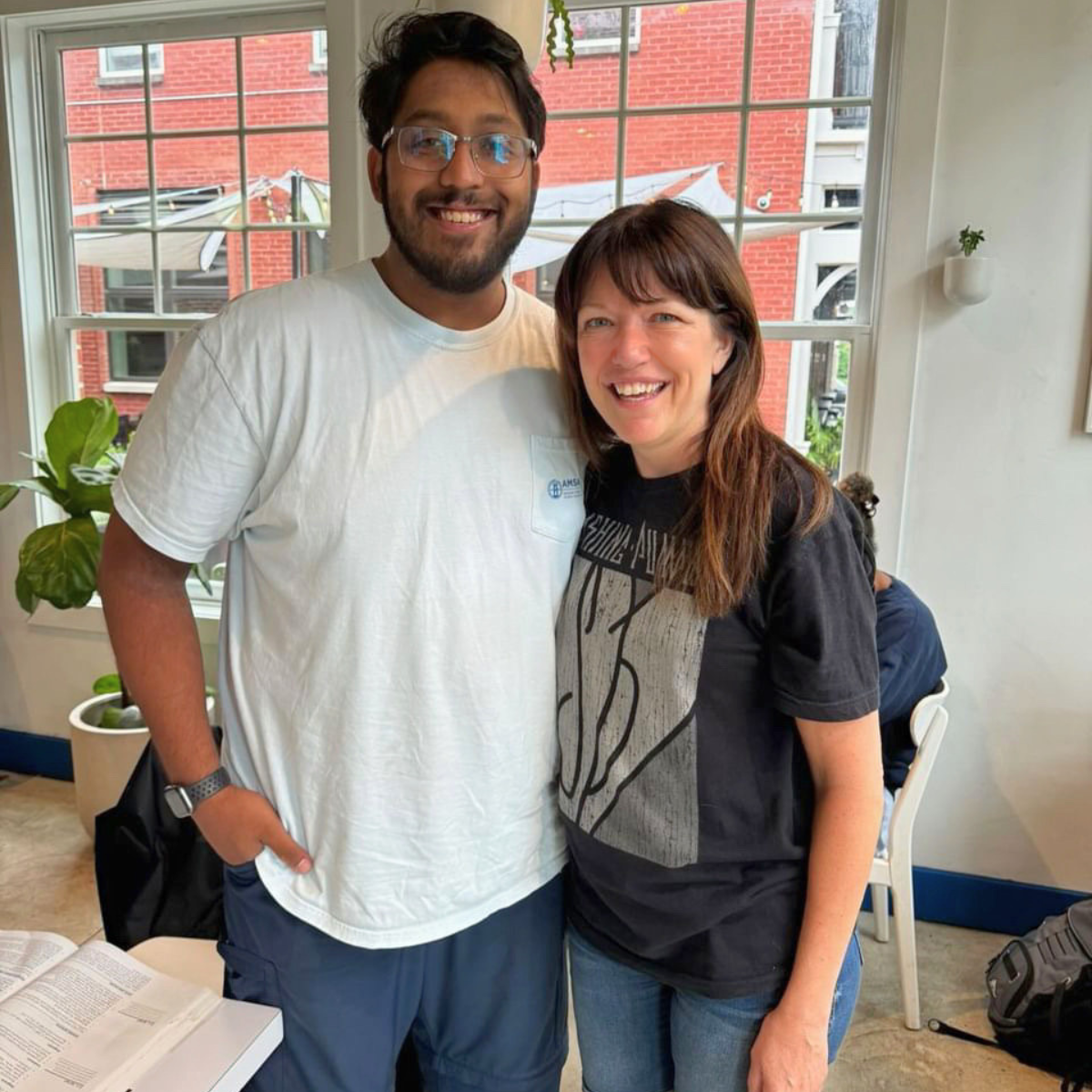
Recently, I ran into a former student at a local coffee shop. We hadn’t seen each other in years, so we spent a few minutes catching up. He had just finished medical school and was beginning his residency, and I loved hearing about everything he had accomplished.
Before we went our separate ways, he shared something I’ll never forget. He told me that the love of music he discovered as a student has stayed with him all these years.
Hearing that made my heart so full. I was incredibly proud of everything he had accomplished, but knowing that music was still part of his life all these years later reminded me why I started teaching in the first place.
People sometimes assume that success in music lessons means becoming a professional musician or earning a scholarship to study music in college. While those things are wonderful, they’ve never been my definition of success.
I’ve taught students who have gone on to careers in music, and I’m incredibly proud of them. But I’ve also taught students who became doctors, teachers, engineers, attorneys, parents, business owners, and just about everything in between. What makes me smile is knowing that many of them still play. They sit down at the piano after a long day, sing in their church choir, pick up a guitar on the weekend, or simply find comfort in listening to music with a deeper appreciation than they had as children.
That’s what I hope for every student who walks through our doors.
Of course, I hope they learn beautiful music, develop solid technique, and gain confidence in their abilities. But more than anything, I hope they discover a love of music that stays with them for the rest of their lives.
Whether they become a professional musician, a physician, a teacher, an engineer, or anything else, I hope music always has a place in their story.
If that happens, then I think we’ve both been successful.
Everyone’s Musical Journey Begins Somewhere
Whether you’re picking up an instrument for the very first time, returning after years away, or looking for the right teacher for your child, we’d love to help you take the next step.
At Metro Music Makers, we believe music is about more than learning notes. It’s about building confidence, creativity, connection, and a lifelong love of making music.